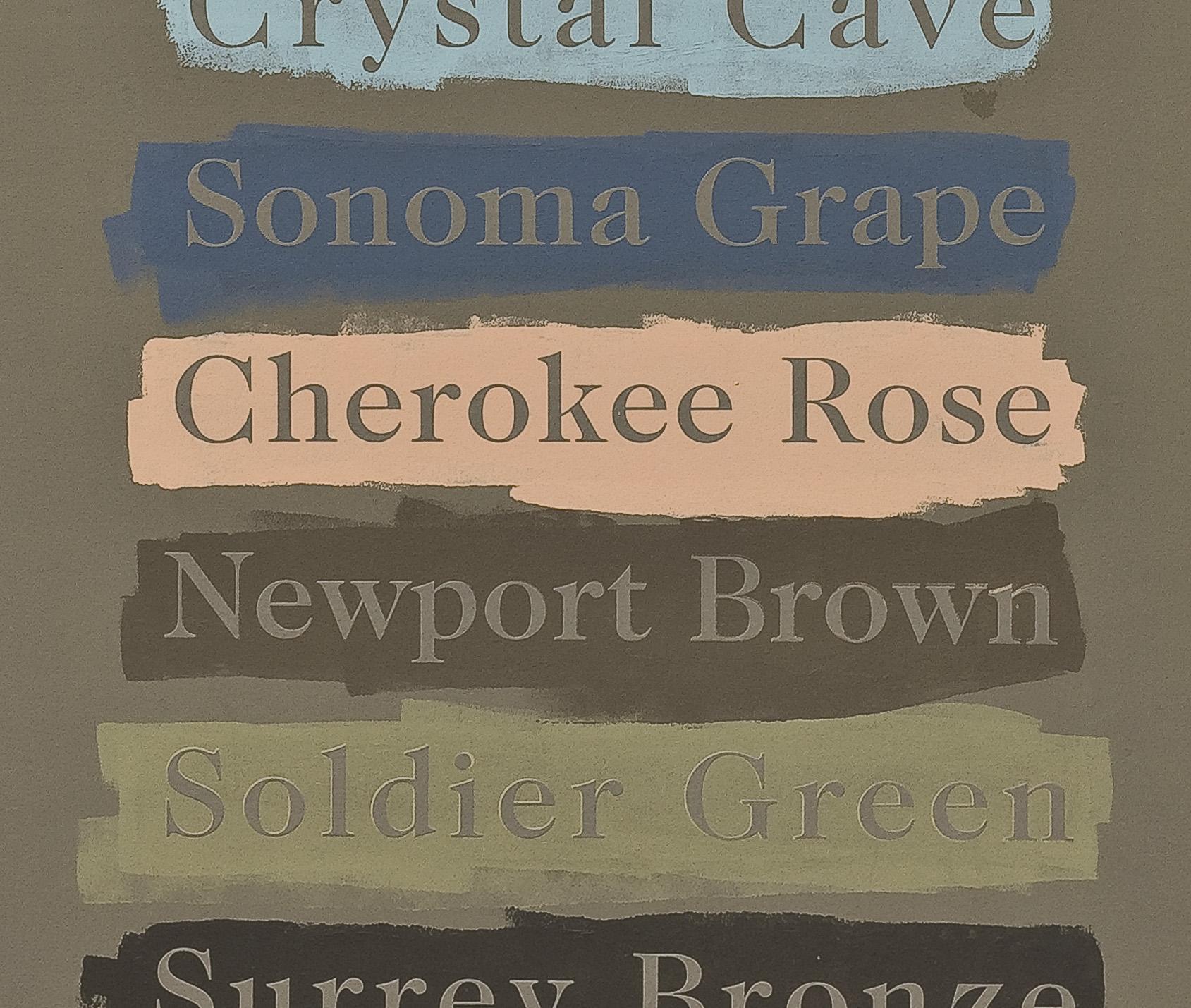
An American History Painting, installation detail, exhibition view from Work of Four Decades, National Gallery of Canada (NGC), Ottawa, 2000. Photo: NGC.
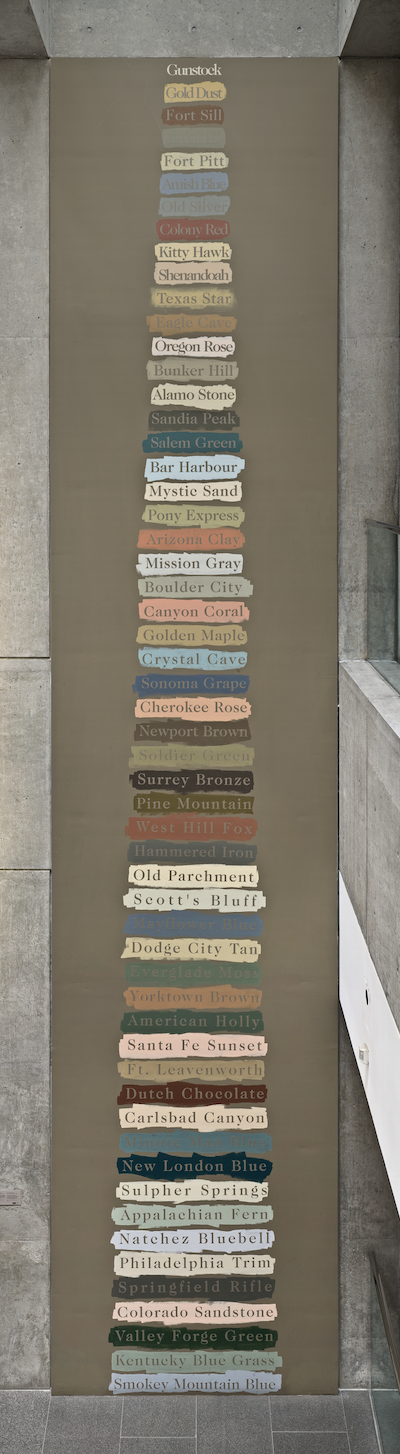
An American History Painting, installation view, exhibition view from Work of Four Decades, National Gallery of Canada (NGC), Ottawa, 2000. Photo: NGC, Clive Cretney
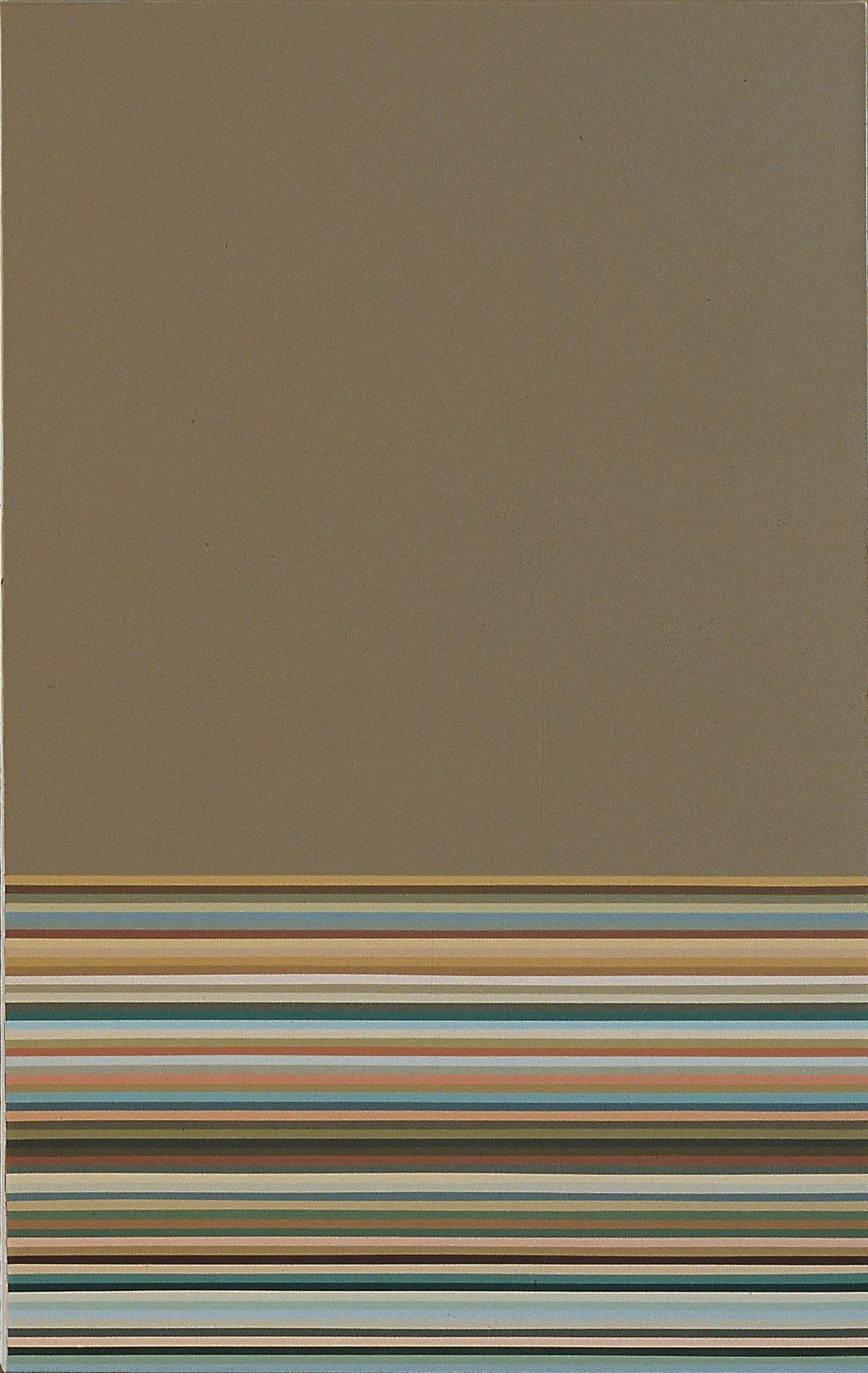
An American History Painting (Painting on Canvas), detail, latex paint on canvas, 1989.
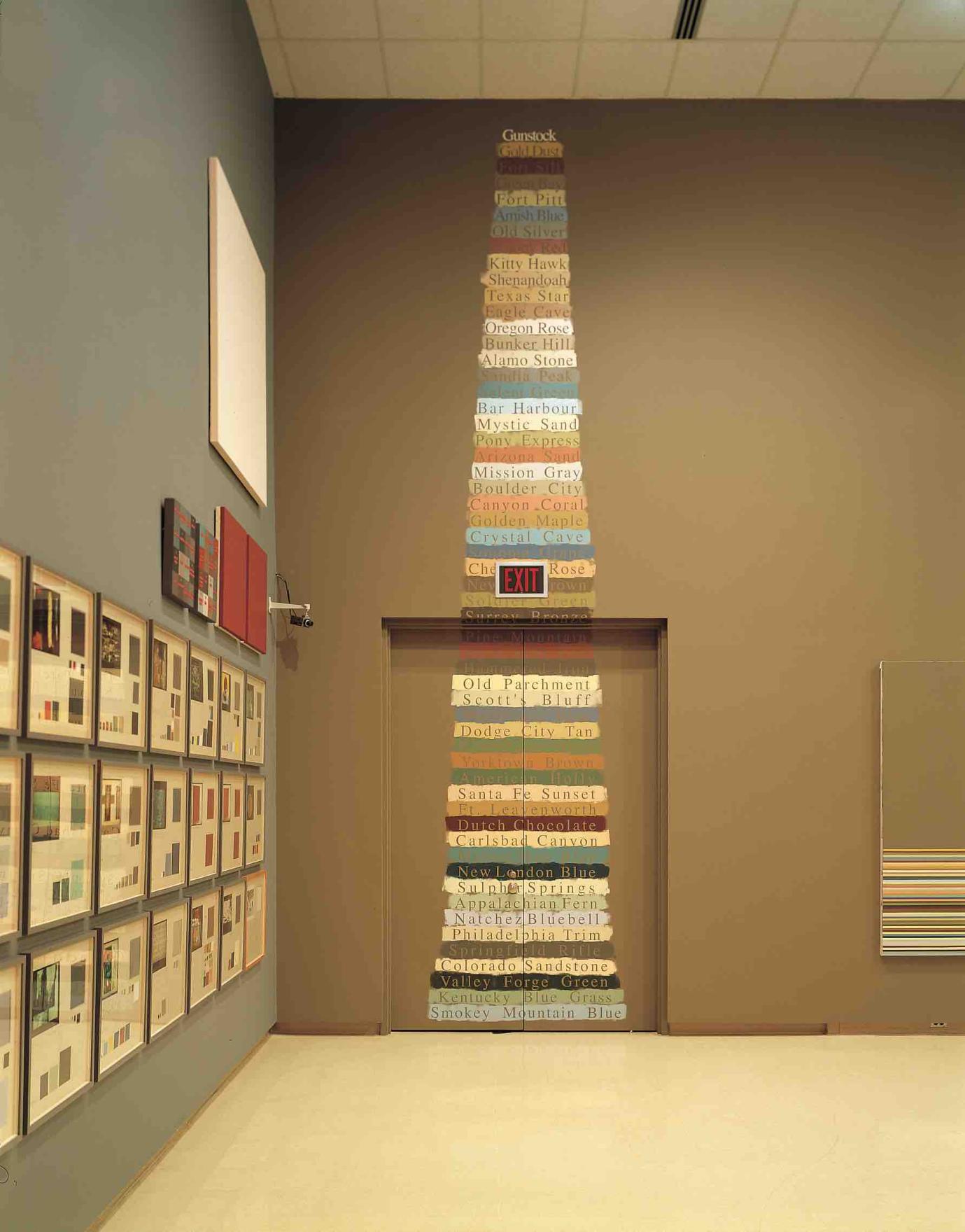
An American History Painting, installation view, exhibition view from Garry Neill Kennedy: Wall Paintings and Related Works 1974-1995, Owens Art Gallery, Sackville, NB, 1996. Photo: Owens Art Gallery
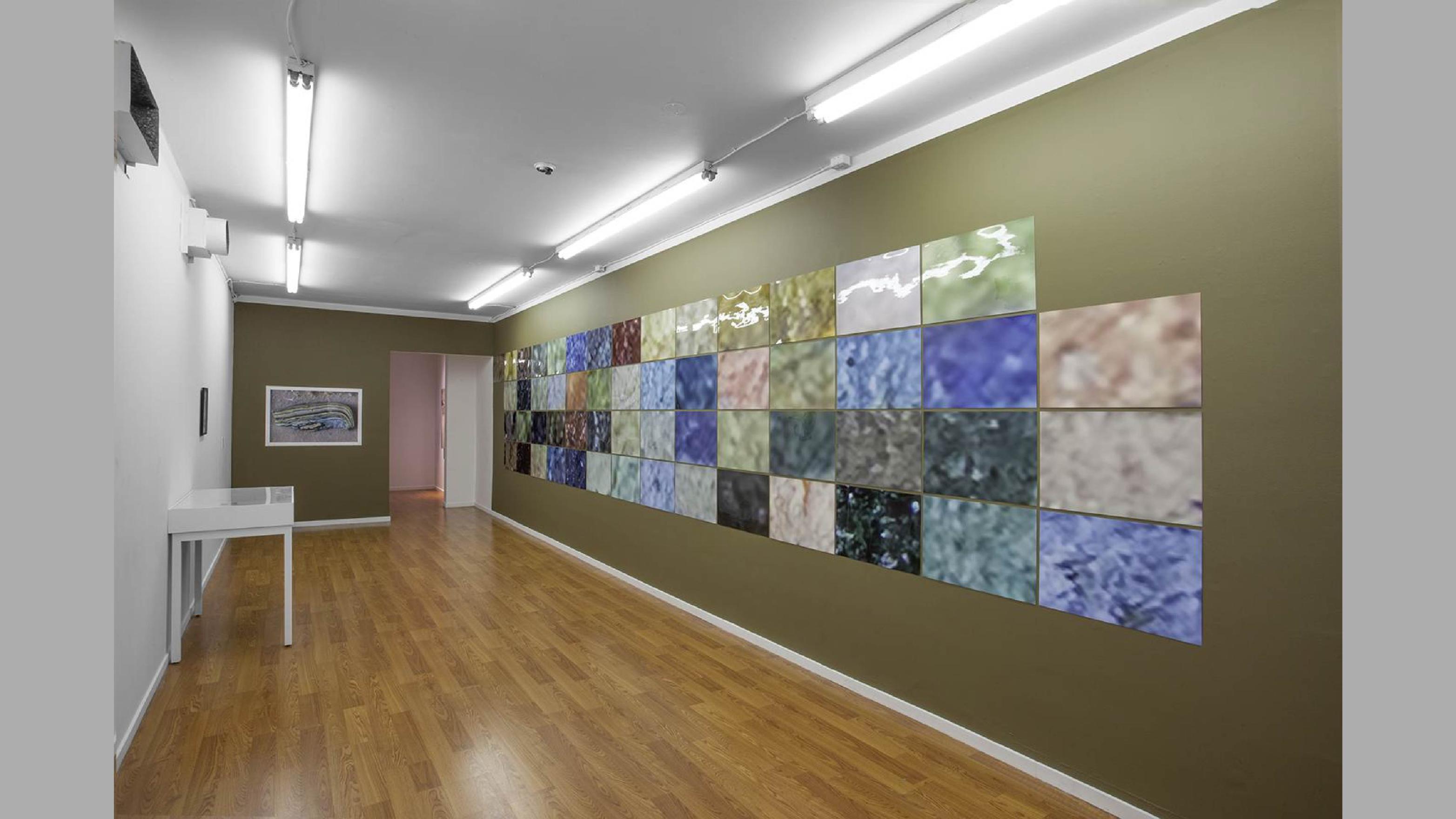
An American History Painting (The Complete List of Pittsburgh Paints Historical Color Series) (1989), installation detail, Cloudy Moment in American History exhibition, The Apartment, Vancouver, 2014.
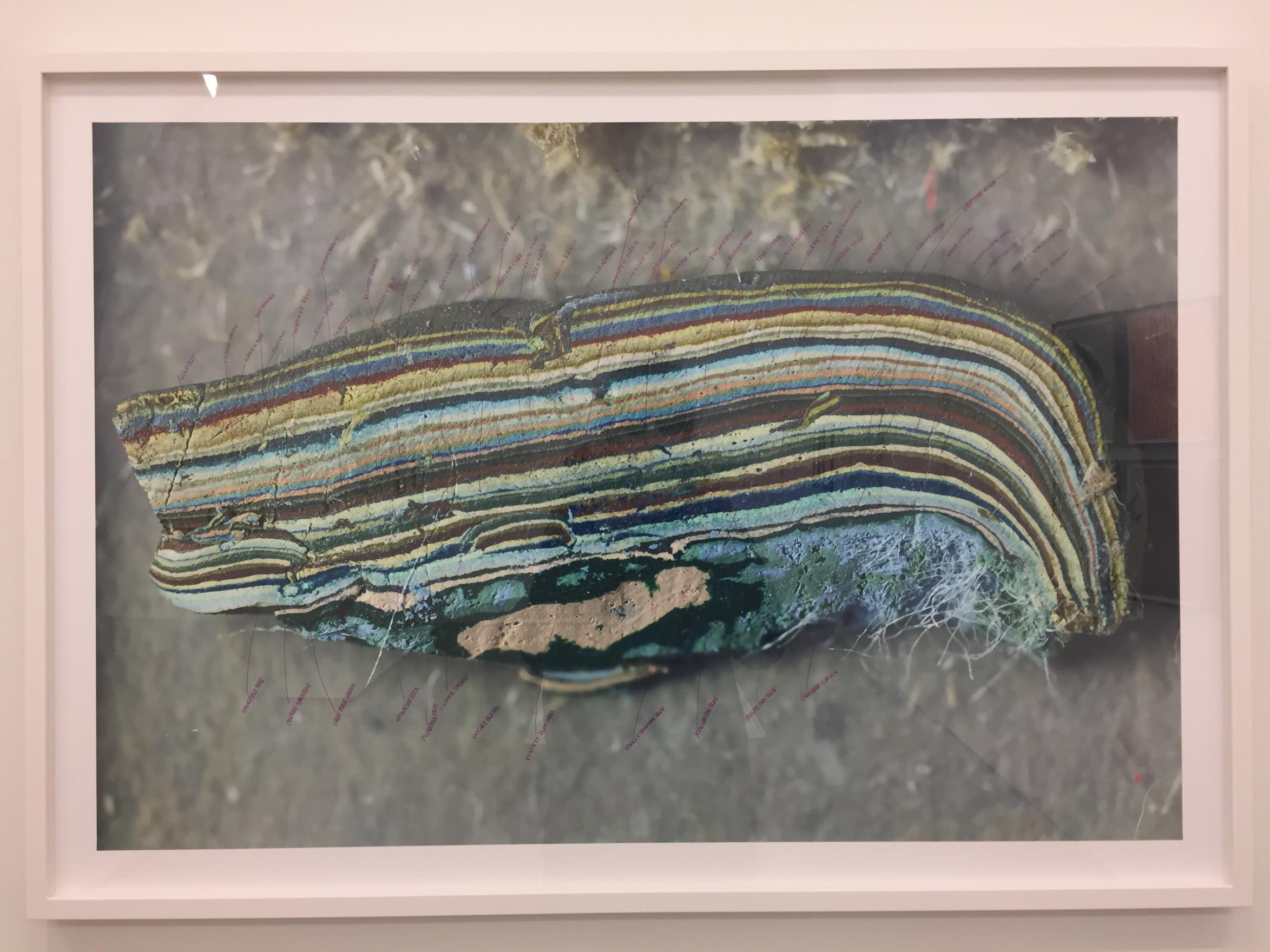
American History Paint Chip Cross Section (1991), detail of Kennedy's handwritten legend added for the Cloudy Moment in American History exhibition, The Apartment, Vancouver, 2014. Photo: Cathy Busby
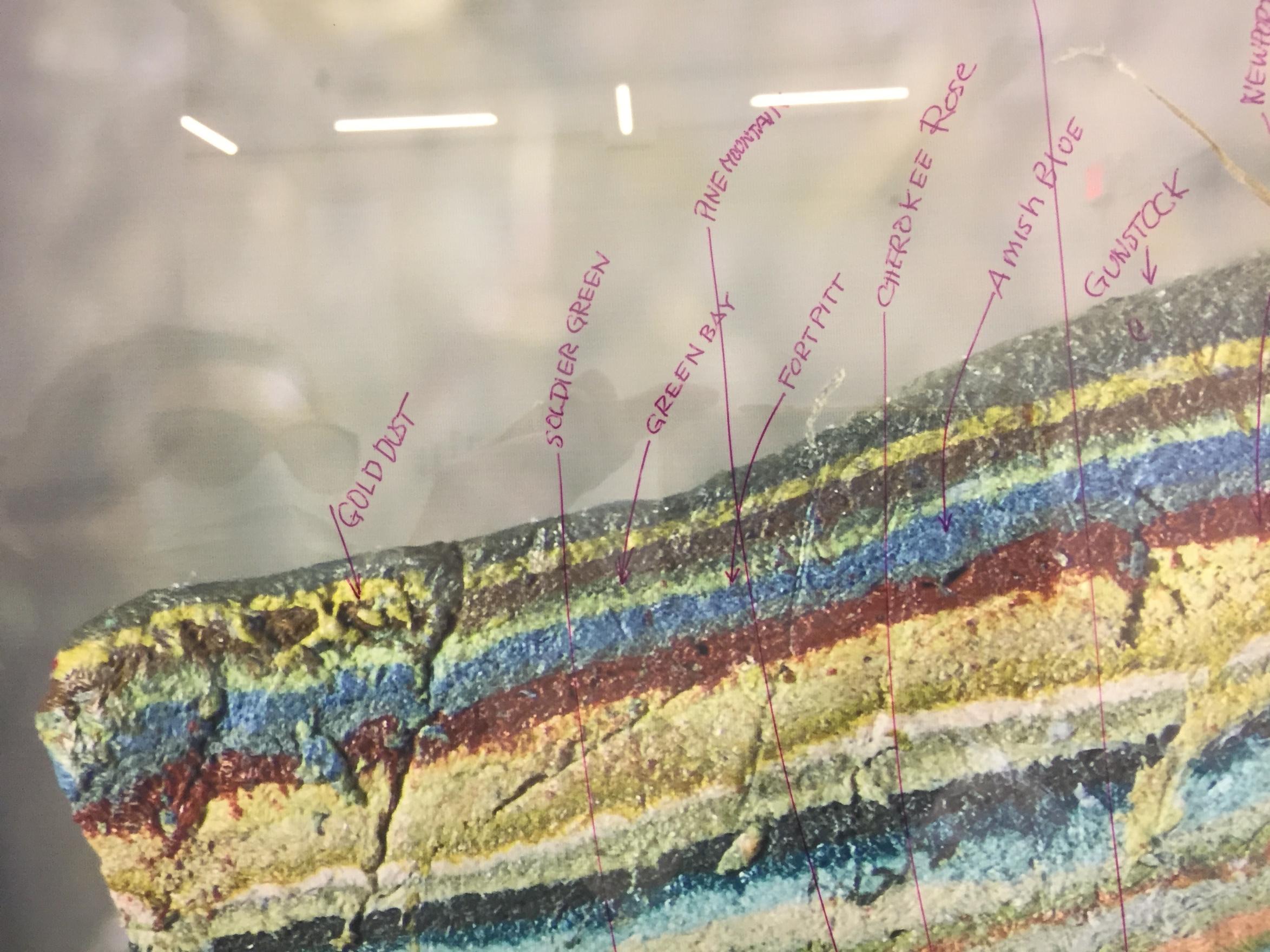
American History Paint Chip Cross Section (1991), detail with Kennedy's handwritten legend added for the Cloudy Moment in American History exhibition, The Apartment, Vancouver, 2014. Photo: Cathy Busby
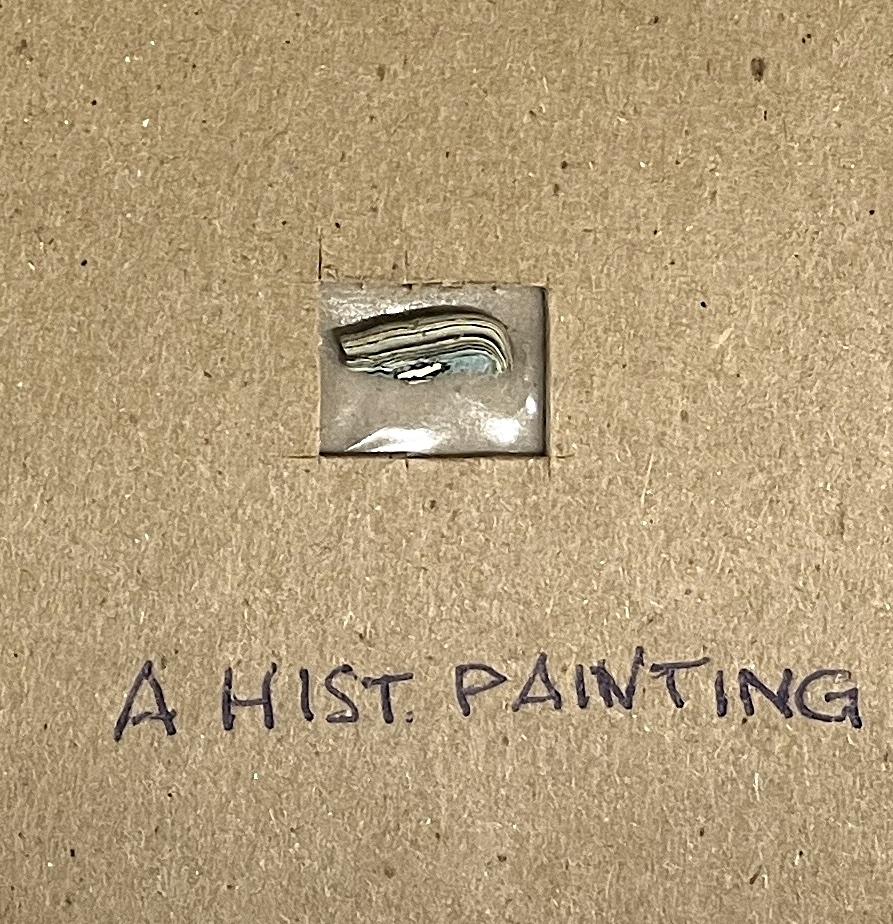
American History Paint Chip Cross Section, detail, paint chip, c. 1991. Photo: Cathy Busby
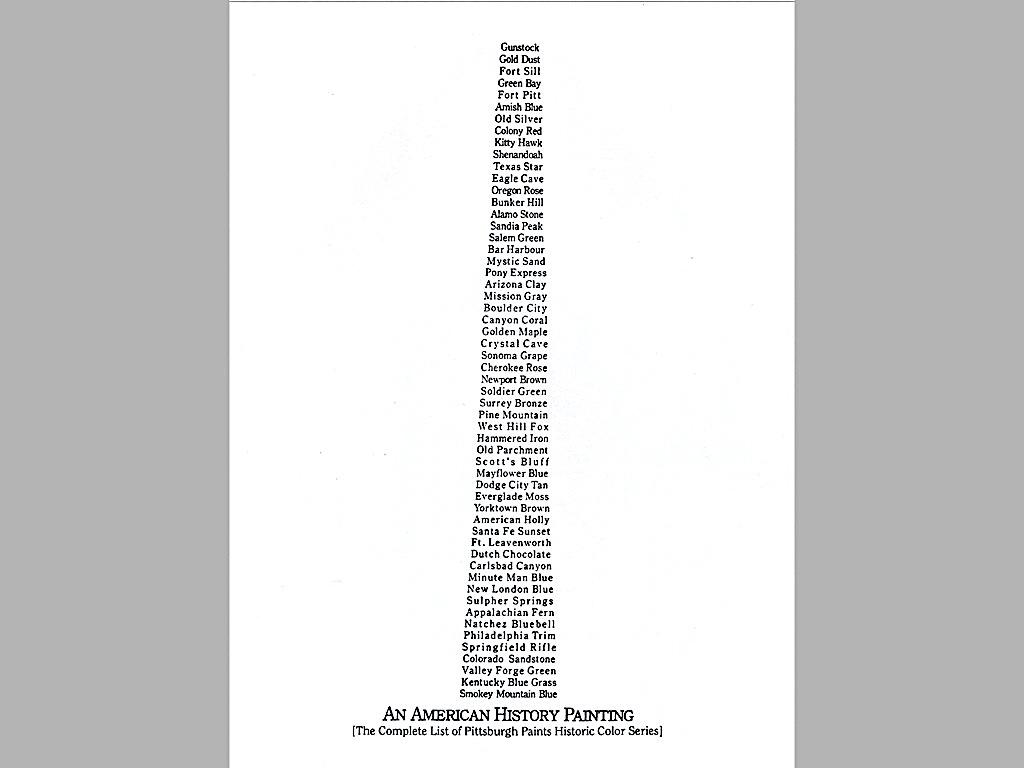
An American History Painting (The Complete List of Pittsburgh Paints Historical Color Series), name list, c. 1989.
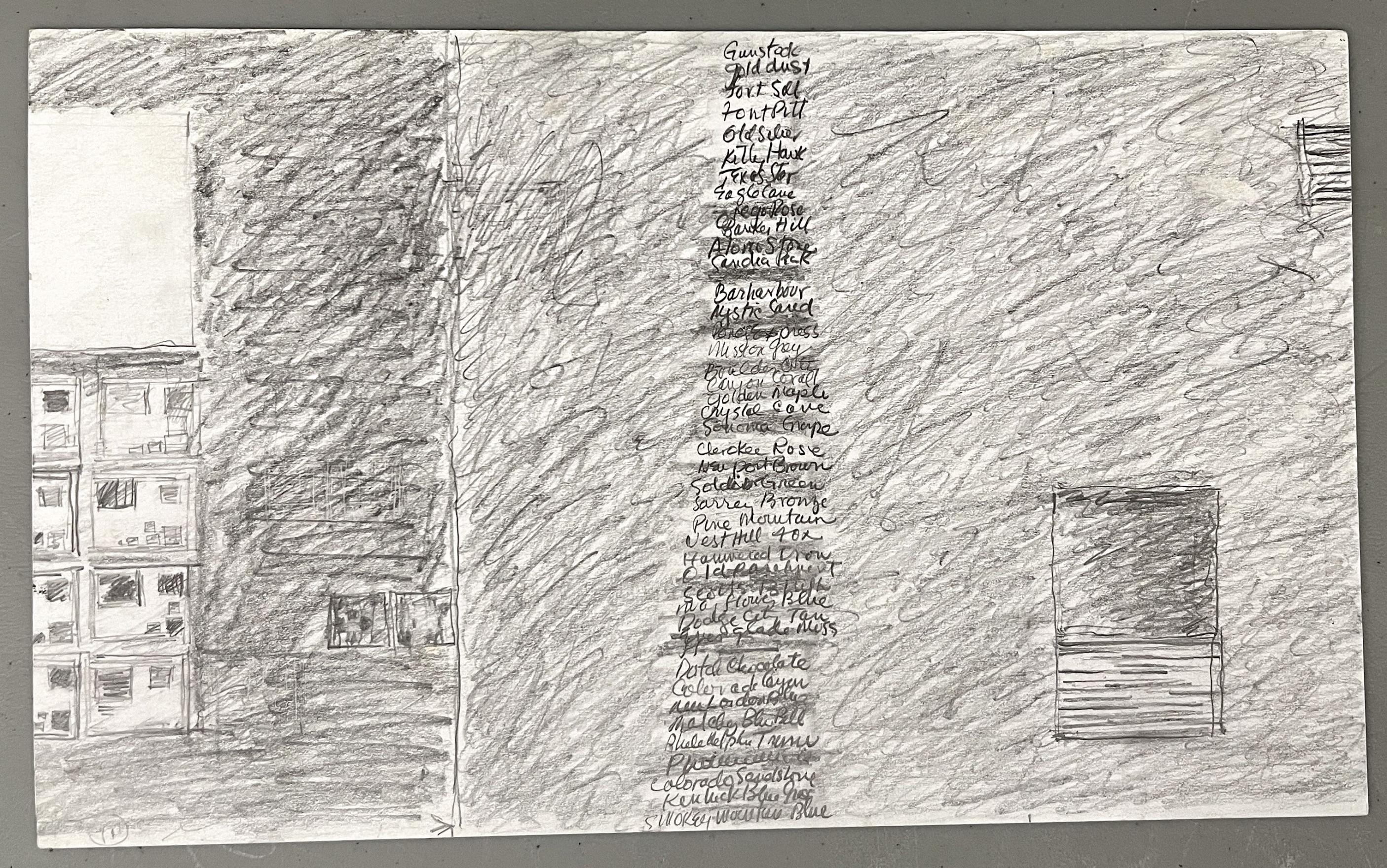
An American History Painting sketch, exhibition mockup drawing detail, graphite on paper, Garry Neill Kennedy: Wall Paintings and Related Works 1974-1995, Portikus, Frankfurt am Main, Germany, 1998. Photo: Cathy Busby
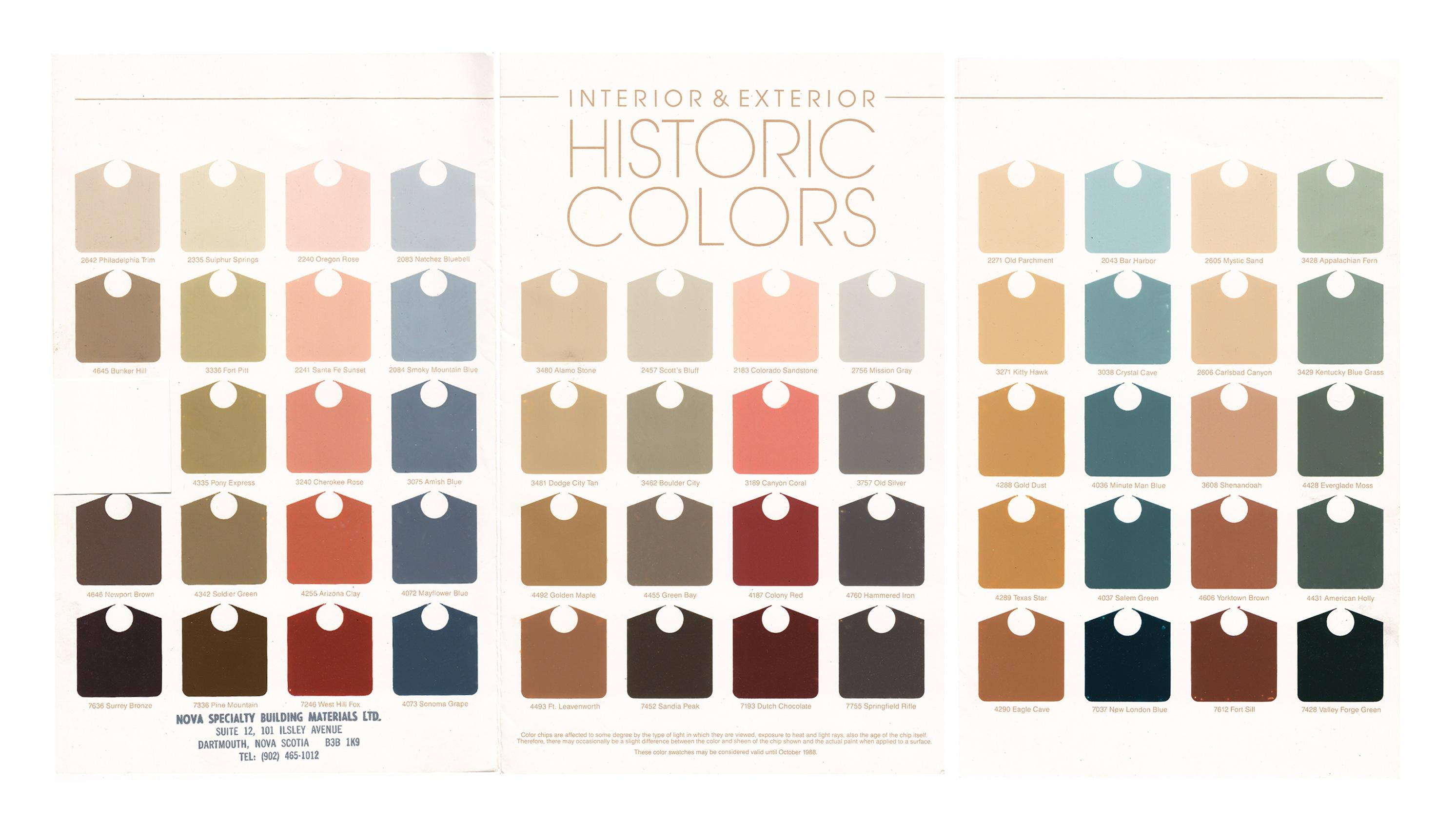
Colour swatch list of Pittsburgh Paints Historical Color Series, c. late-1980s
American History Painting (1989)
The concept behind American History Painting (The Complete List of Pittsburgh Paints Historical Color Series) emerged out of Kennedy's interest in paint colour names. For this work, he took interest specifically in Pittsburgh Paints Historical Color Series, finding humour and irony in how this collection of colour names related to broader notions of America and its national history.
Taking a methodical approach, Kennedy organized the names in an obelisk shaped list (to reflect the Washington Monument), sorting them from longest to shortest based on letter count, with the shortest name topping off the stack. Based on this collection, the name that came out on top was Gunstock. Kennedy found humour in the idea that what topped off this historical American colour series was "Guns" and "Stock," what he felt were two founding elements of the nation.
Over the decades Kennedy made many layer paintings on canvas. These works were dictated by his organization of paint names by length. For each work he would start by covering the canvas in the colour that had the longest name and continued up to the shortest. With each layer, Kennedy would leave a small strip visible then cover the remainder of the canvas in the subsequent colour. For his 1989, American History Painting canvas (now part of the Vancouver Art Gallery's permanent collection), the colour overarching everything was Gunstock, once again "guns and stock" lingered as a statement through this lexicon of paint names.
Kennedy's American History Painting was installed as large scale wall paintings at various galleries, including for Garry Neill Kennedy: Wall Paintings and Related Works 1974-1995 (Owens Art Gallery, Sackville NB, 1996 and Portikus, Frankfurt am Main, Germany, 1998), as well as for Kennedy's retrospective Work of Four Decades (Art Gallery of Nova Scotia, Halifax, 2000; National Gallery of Canada (NGC), Ottawa, 2000; Beaverbrook Art Gallery, Fredericton, NB, 2001), with the painting at the NGC remaining up as a permanent installation.
In 2014, American History Painting was explored anew in the exhibition Cloudy Moment in America History at The Apartment (Vancouver). For this series of works, Kennedy began with a quarter inch paint chip from his 1989 canvas, photographed it, and blew up the image to expose the 56 pigments in stratified layers. He then created a series of blurry monochrome images from further enlargements of each layer.